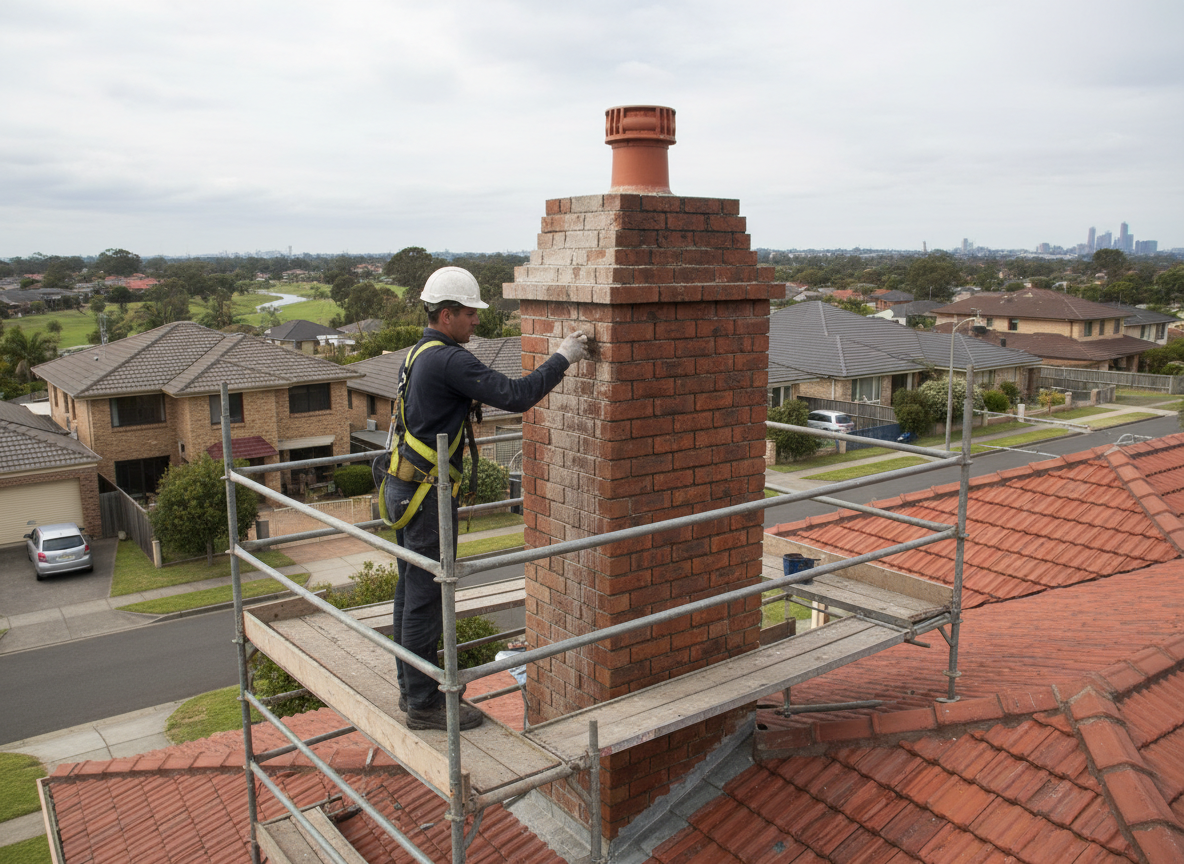
Werribee sits in the City of Wyndham with many brick and masonry chimneys on homes built from the 1970s onward in Tarneit and Wyndham Vale. Warm summers give way to cooler wet months that drive water into mortar joints and flue liners. Standard roof flashings often fail where wind-driven rain hits the south and west faces, especially on properties near the Werribee River corridor. Proper waterproofing uses breathable silane-siloxane sealers that allow vapour escape while blocking liquid water, rather than film-forming coatings that trap moisture inside the flue.
Access in Riverbend and older pockets near Werribee Plaza can be tight because of low-pitch roofs and nearby trees. Technicians must work around existing TV antennas and solar panels without disturbing them. Edge cases include chimneys that share walls with neighbours in Hoppers Crossing or Werribee South, where sealant must stop short of the party line to avoid migration. We always check for hairline cracks around the crown and rain cap before application, because missed cracks let water bypass the new coating within one winter.
Local soil movement from clay expansion in the Wyndham area can shift chimney bases over time, opening new entry points at the roof line. Waterproofing jobs therefore start with a full visual check from the crown down to the damper. Homeowners in Wyndham Vale often see staining on internal plaster after heavy rain because the original lead flashing has corroded. Re-sealing these points with compatible mastic plus a full crown treatment stops recurrence without needing full flue rebuilds.
Technician insight
In Werribee the thing that catches most people out with chimney waterproofing is how quickly clay soil movement around Wyndham Vale shifts the base and opens new gaps at the roof line after the first wet winter. Homeowners often think a quick spray will fix it, but without addressing the crown cracks first the water just finds the next path.
Tarneit Chimney After Heavy Rain
Water stains appeared on the ceiling in a Tarneit home near the Werribee Open Range Zoo after a warm-season storm. Inspection showed failed lead flashing and open crown joints on a 1980s brick chimney. We cleaned the crown, sealed the joints and flashing edges with compatible mastic, then applied two coats of silane-siloxane sealer. No further staining occurred the following winter.
How it works
- 1
Site Inspection
We examine the crown, flashing, and flue from the roof in Werribee, checking for cracks, vegetation, and prior sealant failure.
- 2
Surface Preparation
Loose mortar and old coatings are removed, joints are cleaned, and any active leaks are noted for targeted repair.
- 3
Sealer Application
Breathable silane-siloxane sealer is applied in two coats to the crown, flue, and exposed brick while avoiding neighbouring structures.
- 4
Final Check and Documentation
We photograph treated areas and test water beading before leaving the site in Tarneit or Wyndham Vale.
Pricing
Upfront quotes after inspection; cost depends on chimney height, access, and existing damage.