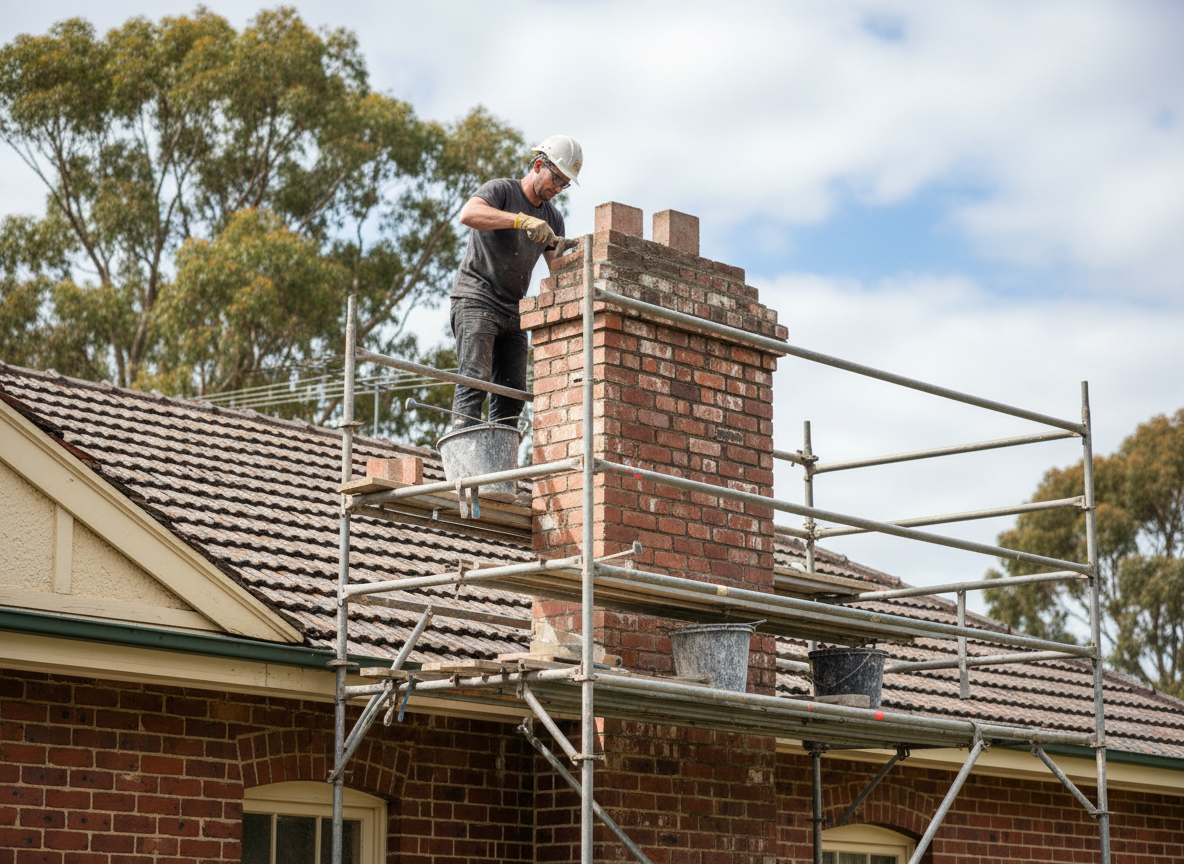
Chimney masonry in Werribee homes built from the 1970s onward often shows cracked mortar joints and spalled bricks after repeated summer heat cycles that push and pull the stack against the roof flashing. In suburbs such as Tarneit and Wyndham Vale, where many single-storey brick veneer houses sit on reactive clay, even small foundation shifts transmit up the flue and open gaps that let water track down the internal walls during the cooler months. Repair work here starts with removing loose material back to sound brick, then installing stainless-steel ties and repointing with a lime-based mix that matches the original softer mortar rather than modern cement which traps moisture.
Edge cases appear near the Werribee River and in lower-lying pockets of Hoppers Crossing where rising damp meets the chimney base. The combination of warm summers drying the top courses while the base stays damp creates a classic hourglass failure pattern. Technicians routinely cut out and replace the lower three to four courses, install a new damp-proof course, and rebuild using salvaged bricks to keep the visual match with the rest of the house. Any work above the roof line also requires checking the concrete cap for hairline cracks that let water enter the flue liner during sudden downpours common in the region.
City of Wyndham planning rules require that any structural repair to a chimney visible from the street must maintain the original profile and materials. Homeowners in Riverbend and near Werribee Plaza frequently discover this only after a neighbour complaint or when selling. Proper repair therefore includes documenting the existing stack with photos before work begins and ensuring the rebuilt section aligns with the original corbelling so the job passes inspection without extra council visits.
Technician insight
In Werribee the thing that catches most people out with chimney masonry repair is the reactive clay under the older brick homes in Tarneit and Wyndham Vale. A small seasonal shift at ground level opens the joints right at the roof line, and homeowners usually notice only when water stains appear inside during the first cool change after summer.
Tarneit Brick Veneer Stack
A 1980s home in Tarneit showed water marks on the lounge ceiling after heavy rain. Inspection found the clay soil had moved the chimney base, cracking the mortar three courses above the roof. We removed the damaged section, installed a new damp-proof course and stainless ties, then rebuilt with matching bricks and lime mortar. The ceiling stayed dry through the next winter.
How it works
- 1
Site Inspection
Assess brick condition, mortar joints, roof flashing and any signs of movement from the clay soil base.
- 2
Material Removal
Cut out damaged bricks and mortar to sound substrate while protecting roof tiles and gutters.
- 3
Structural Reinforcement
Install stainless ties and new damp-proof course where required before rebuilding.
- 4
Rebuild and Point
Replace bricks, repoint with compatible lime mortar and fit a new concrete cap if the original is cracked.
- 5
Final Check
Test for water tightness and confirm the stack meets local visual requirements.
Pricing
Upfront quotes provided after inspection; final price depends on height, access and extent of brick replacement needed.