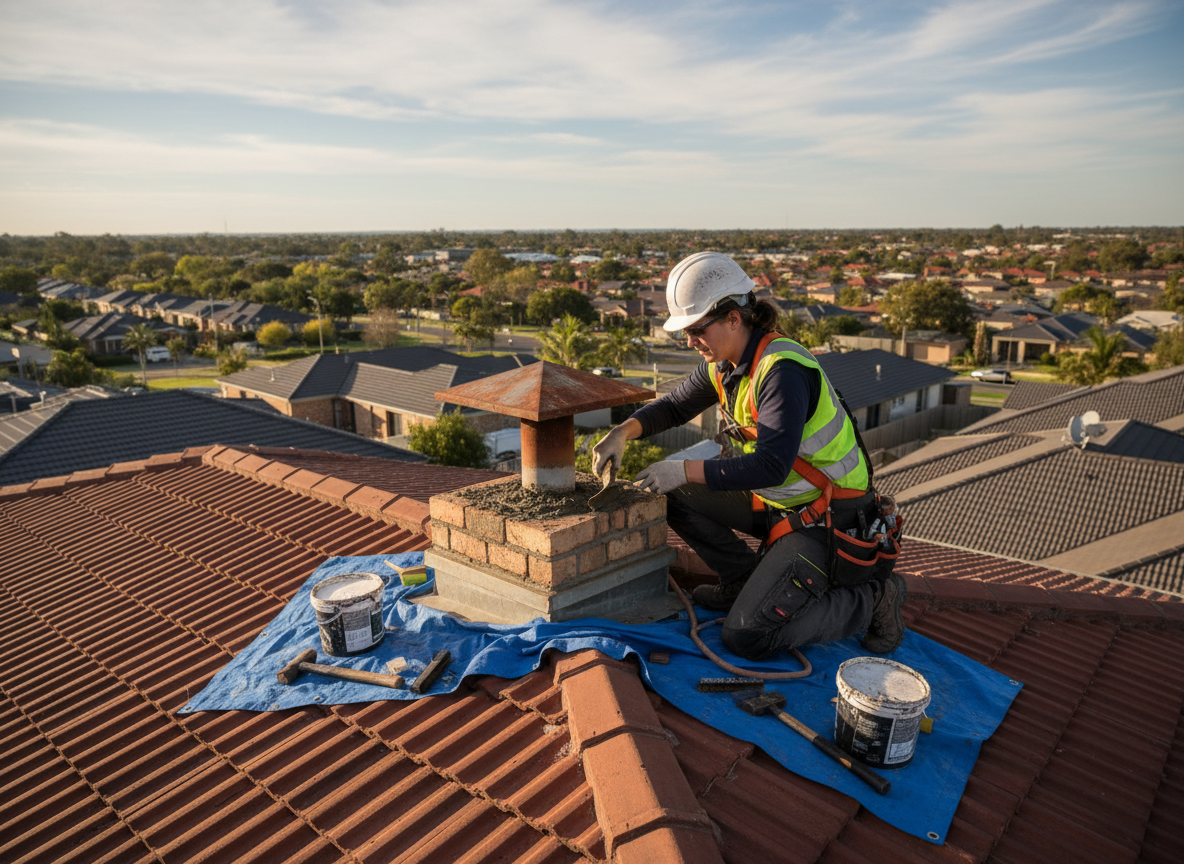
Chimney caps in Werribee take steady punishment from warm summer winds and the occasional heavy winter downpour that funnels straight down flues in older brick homes around central Werribee and Wyndham Vale. Stainless steel or galvanized replacements hold up better than plain galvanized when salt-tinged air drifts in from Werribee South, but even these need proper flashing integration to stop water tracking behind the masonry. Homeowners in newer Tarneit estates often find thin factory caps corrode within a decade because the original install skipped the required mortar joint sealing that local wind loads demand.
Edge cases appear regularly on two-storey homes near Werribee Park where roof pitch and tree cover create constant shade and slower drying, leading to rust creep under the cap base. We check for cracked flue tiles and deteriorated crown mortar at the same time because a failing cap frequently masks water entry that has already reached the ceiling joists. Code requires the cap to maintain proper draft clearance; blocking even part of the opening with an oversized replacement can trip CO detectors in sealed modern builds common along the Riverbend estate.
Before any repair we remove the old cap entirely rather than layering new metal over rusted fasteners, a shortcut that fails quickly once the next summer storm hits. Proper anchoring into sound brick or concrete block prevents the cap lifting in the gusts that sweep across open paddocks near the Werribee Open Range Zoo. We always verify the spark arrestor mesh size matches the appliance type so embers stay contained during the cooler months when fires see more use.
Technician insight
In Werribee the thing that catches most people out with chimney cap repair is the constant salt air moving inland from Werribee South and Hoppers Crossing that rusts standard caps on 1970s brick homes twice as fast as the same cap on a Tarneit new build; skipping the full crown inspection almost always means the job has to be redone inside two winters.
Cap Failure on Wyndham Vale Home
Heavy winter rain had been entering around a rusted cap on a single-storey brick house in Wyndham Vale. We found the original galvanized cap had corroded through at the base and water had reached the flue crown. We removed the cap, repaired the crown mortar, installed a stainless replacement with sealed flashing and confirmed draft before completion.
How it works
- 1
Site Inspection
We climb and examine the existing cap, flue crown and surrounding masonry on homes in Werribee, Tarneit or Hoppers Crossing to identify corrosion, loose flashing and water entry points.
- 2
Material Selection
We match stainless or heavy-gauge galvanized to the roof exposure and existing flue size, confirming draft clearance meets local requirements.
- 3
Old Cap Removal
Complete removal of the damaged cap and any failed fasteners or mortar, followed by cleaning of the crown surface.
- 4
New Installation
Secure the new cap with proper flashing, sealed joints and correct mesh, then test draft before leaving the site.
Pricing
Upfront quote after on-site inspection; cost varies with roof height, cap material and any masonry repairs required.