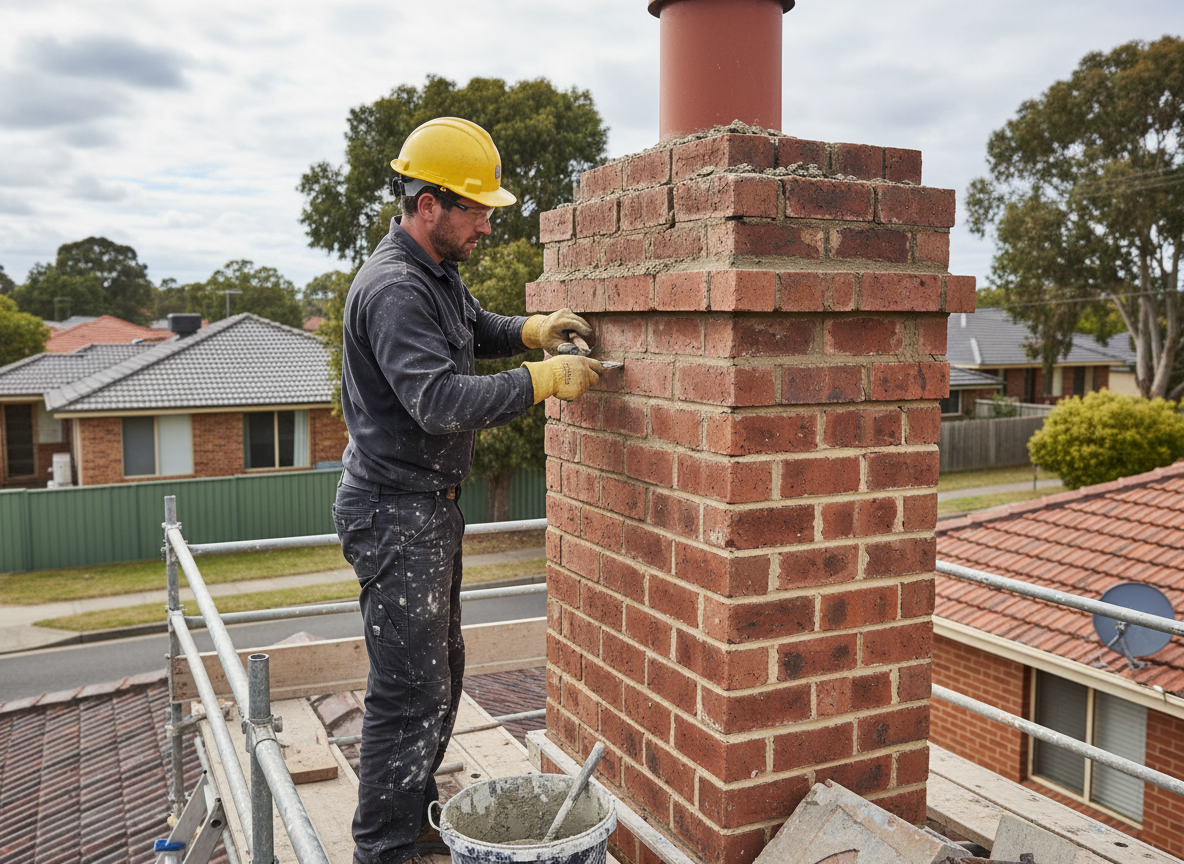
Tuckpointing restores the mortar joints in brick chimneys that have cracked or eroded from decades of wood smoke and the temperature swings common in Werribee's temperate climate. In neighborhoods like Wyndham Vale and Tarneit, many chimneys were built with softer lime-based mortars that shrink and pull away from the bricks once summer heat dries them out after winter use. We rake out the failed joint to a consistent depth, then pack in a new lime-rich mix tinted to match the original colour so the chimney does not stand out against the roofline near Werribee Plaza.
Access is often the hidden variable on single-storey weatherboard homes in Riverbend and Hoppers Crossing. Scaffolding must be erected on the side facing prevailing winds so the new mortar cures evenly before the next warm spell. We also check the flue liner and crown while we are up there, because water that enters through open joints can run down inside the chimney and damage the hearth in the living room below.
Edge cases we see regularly include chimneys on 1970s brick veneer houses where the original builder used a hard cement mix that has spalled the brick faces. In those situations we cut back only the joint, never the brick, and use a slightly softer mix so the new pointing does not force the bricks apart during the next hot summer. All work is done from the roof down so debris does not fall into the firebox.
Seasonal Guidance
Tuckpointing is best scheduled in the shoulder months before the first cold snap. Once winter arrives, residents in Werribee South and Tarneit light fires daily, and any open joints allow smoke to leak into the roof space. Waiting until spring also means the new mortar has several warm weeks to cure fully before the next summer expansion cycle.
Technician insight
In Werribee, the thing that catches most people out with chimney tuckpointing is the way our warm summers dry out the soft lime mortar on chimneys built before the 1980s in Wyndham Vale and Tarneit. Homeowners often notice the gaps only after the first winter smoke leak, but by then water has already run down the flue and stained the ceiling. Doing the work while the weather is still mild gives the new mortar time to cure before the next heating season.
Tuckpointing on a Tarneit Chimney
A 1970s brick home in Tarneit showed smoke staining on the living-room ceiling after winter. We found open joints on the south face where prevailing winds had driven rain into the mortar. After raking and repointing with a matching lime mix, the leaks stopped and the ceiling dried out without further repair.
How it works
- 1
Site Inspection
We climb the roof at 114B Watton St base or travel to Riverbend, Tarneit or Wyndham Vale to photograph every joint and measure chimney height.
- 2
Mortar Removal
Old mortar is raked out by hand to a uniform depth without damaging brick edges, then the joint is brushed clean of dust.
- 3
Mortar Matching and Application
A lime-based mix is tinted on site to match existing colour, then pressed firmly into the joints in thin layers and tooled to a concave finish.
- 4
Final Cure and Check
We return after initial set to inspect for shrinkage and brush the face clean, leaving the chimney ready for the next winter.
Pricing
Pricing varies by chimney height, number of sides requiring work and access difficulty; we provide an upfront quote after inspection.