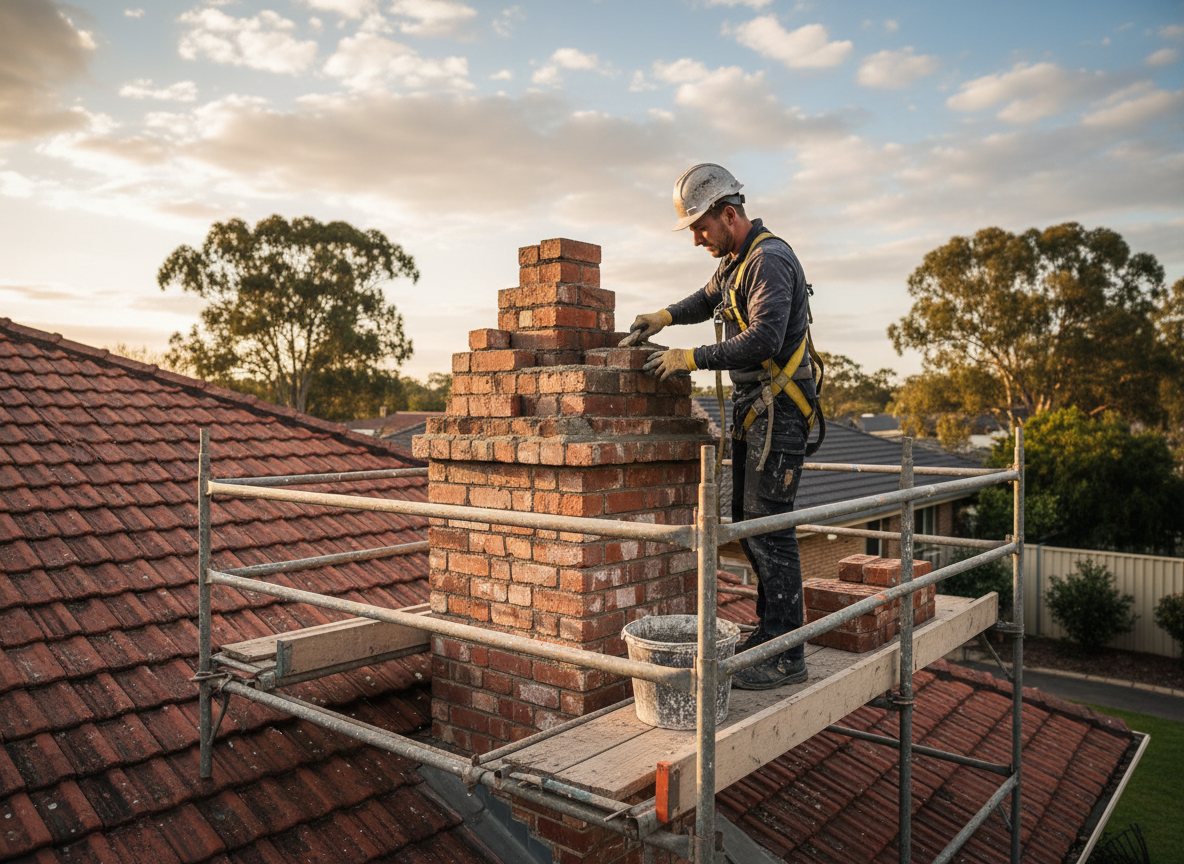
Brick chimneys in Werribee's established suburbs like Wyndham Vale and Tarneit often show wear from the region's temperate climate with warm summers. Repeated heating and cooling cycles cause mortar joints to crack and bricks to spall, especially on chimneys exposed to afternoon sun. Homes built before the 1990s in these areas frequently have single-skin brick stacks that lack modern flue liners, allowing moisture from summer storms to penetrate and accelerate deterioration. Repair work here requires matching the original clay bricks and lime-based mortar to avoid future differential movement.
Access challenges appear regularly on properties near Werribee Park and the Werribee Open Range Zoo where mature trees and sloping blocks limit scaffold placement. Technicians must work around established gardens while removing loose brickwork without dislodging remaining courses. In Riverbend and Hoppers Crossing, many chimneys serve wood heaters that run through winter, so repairs must restore full draft performance before cooler months arrive. Failed flashings at the roof line are the most common entry point for water that then tracks down inside the flue and damages interior brick faces.
Local soil movement in the City of Wyndham contributes to chimney tilt on clay-heavy blocks in Werribee South. When foundations shift, the entire stack can lean, stressing the roof penetration and creating gaps that let embers escape. Repair often involves installing stainless-steel straps and rebuilding the top courses with reinforced mortar rather than full demolition. Homeowners in these pockets learn to watch for small cracks that widen after the first hot spell of summer.
Technician insight
In Werribee, the thing that catches most people out with brick chimney repair is how quickly summer heat opens up mortar joints on south-facing stacks after a wet winter. Homes in Tarneit and Wyndham Vale sit on reactive clay that moves more than people expect, so even small cracks at the roof line turn into leaning stacks within a couple of seasons if left alone.
Leaning Stack on Clay Block
A Tarneit homeowner noticed a widening crack where the chimney met the roof after the first warm week of summer. Inspection showed the stack had tilted due to soil movement common on the local clay. We rebuilt the top four courses, added stainless straps and renewed the flashing. The chimney now draws correctly and no longer leaks during rain.
How it works
- 1
Site Inspection
Technician climbs the roof and examines brick condition, mortar joints, flashing and draft from inside the home.
- 2
Damage Assessment
Photos and measurements document spalled bricks, loose mortar and any lean caused by local soil movement.
- 3
Material Matching
Original clay bricks and lime mortar are sourced to match existing stacks common in Wyndham Vale homes.
- 4
Repair Execution
Damaged sections are rebuilt, flashings renewed and the chimney tested for safe draft before handover.
Pricing
Upfront quotes provided after on-site inspection; cost depends on height, access and extent of brick replacement needed.