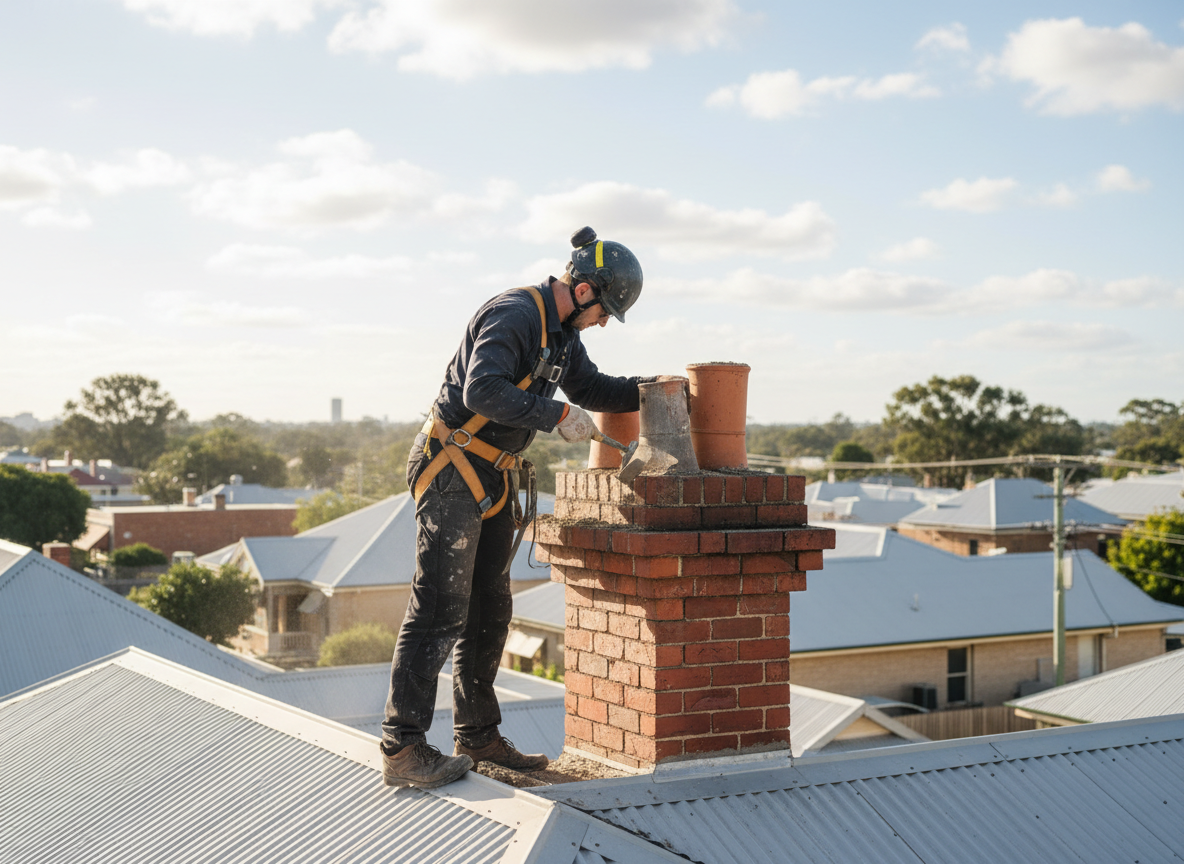
Werribee homes built before the 1990s often feature single-skin brick chimneys tied into timber frames, common in Riverbend and around Werribee Park. Warm summers cause repeated heating and cooling cycles that open mortar joints and allow water entry during the first autumn rains. When cracks reach the flue liner, smoke and creosote can migrate into wall cavities, especially in the older stock near Werribee Plaza. Repairs here focus on repointing with lime-based mortar that matches the original thermal movement rather than modern cement mixes that can accelerate cracking.
In Tarneit and Wyndham Vale, newer estates sit on reactive clay soils that shift after dry summers. This movement frequently twists chimney bases where they meet the roofline, breaking the apron flashing. Technicians working from 114B Watton St carry stainless-steel straps and lead replacement sections sized for the local tile profiles to restore weatherproofing without full demolition. Ignoring the soil movement usually leads to repeated leaks within two seasons.
City of Wyndham properties near Hoppers Crossing and Werribee South face additional wind-driven rain exposure off the bay. This pushes water behind the chimney crown faster than inland suburbs experience. Best practice involves removing the existing concrete crown, installing a new reinforced concrete cap with drip edges, and sealing the flue collar with high-temperature silicone rated for the temperate climate. These steps prevent the internal staining that appears first in upstairs bedrooms during winter use.
Technician insight
In Werribee the thing that catches most people out with best chimney repair is reactive clay soil movement in Tarneit and Riverbend after warm summers; the base twists and cracks the mortar before homeowners notice anything on the roof.
Twisted Base on Tarneit Chimney
Homeowner noticed damp patches upstairs after the first cool nights. Inspection showed the chimney base had shifted on the reactive clay, breaking the apron flashing and letting water track down the flue. We removed the damaged flashing, installed new lead sections with stainless straps, recast the crown with drip edges, and repointed the lower joints. No further leaks reported through the following winter.
How it works
- 1
Site Inspection
Check brick condition, flue alignment, and soil movement signs around the base in neighborhoods like Tarneit.
- 2
Mortar and Flashing Assessment
Identify failed joints and damaged lead or apron flashing common on Werribee roofs after summer heat.
- 3
Repair Execution
Repoint with compatible mortar, replace flashing sections, and reinstall or recast the crown as needed.
- 4
Final Test and Clearance
Run a smoke test and confirm water shedding before leaving the site.
Pricing
Upfront quotes provided after on-site inspection; cost driven by chimney height, extent of brick damage, and soil-related movement.